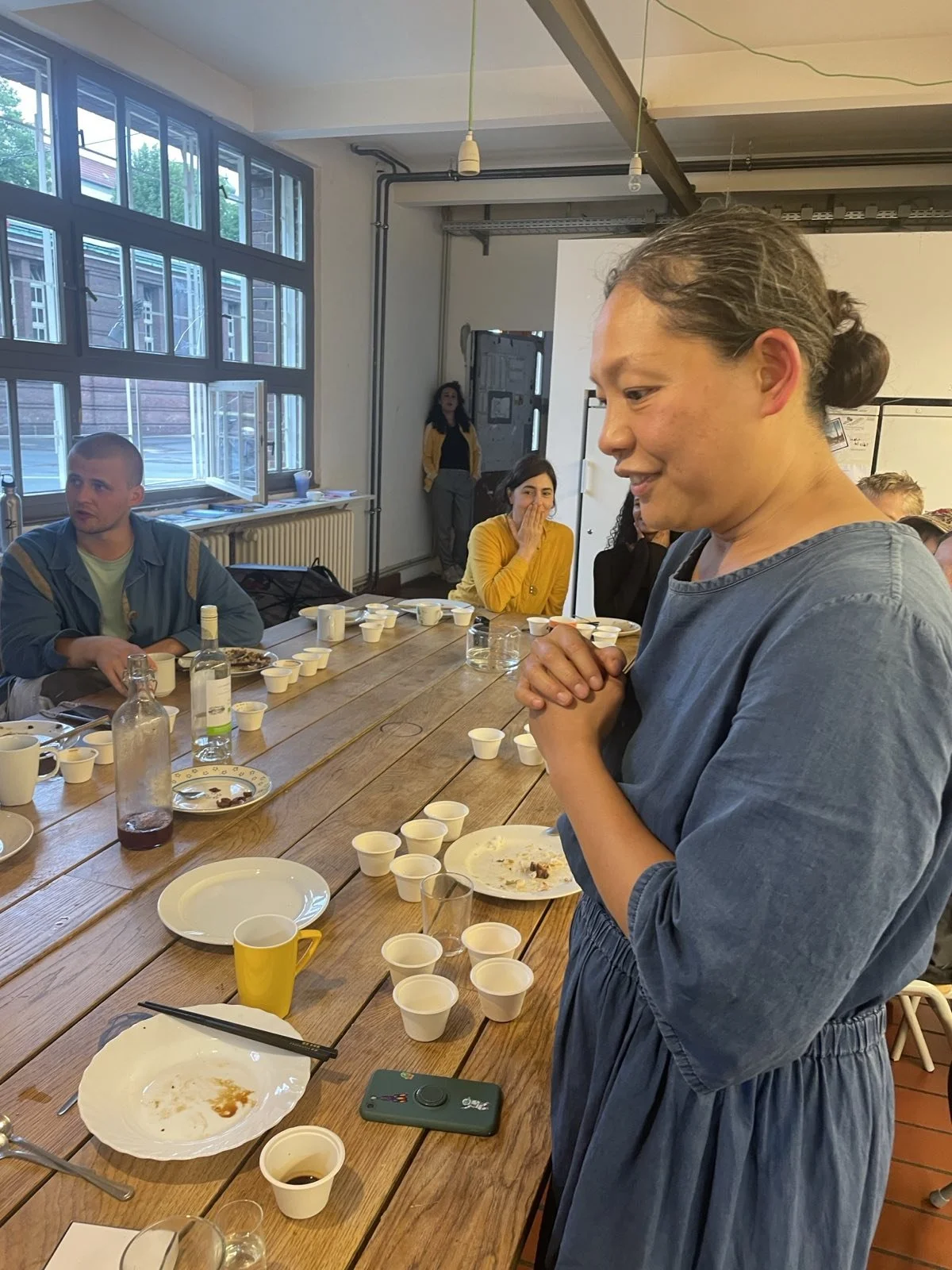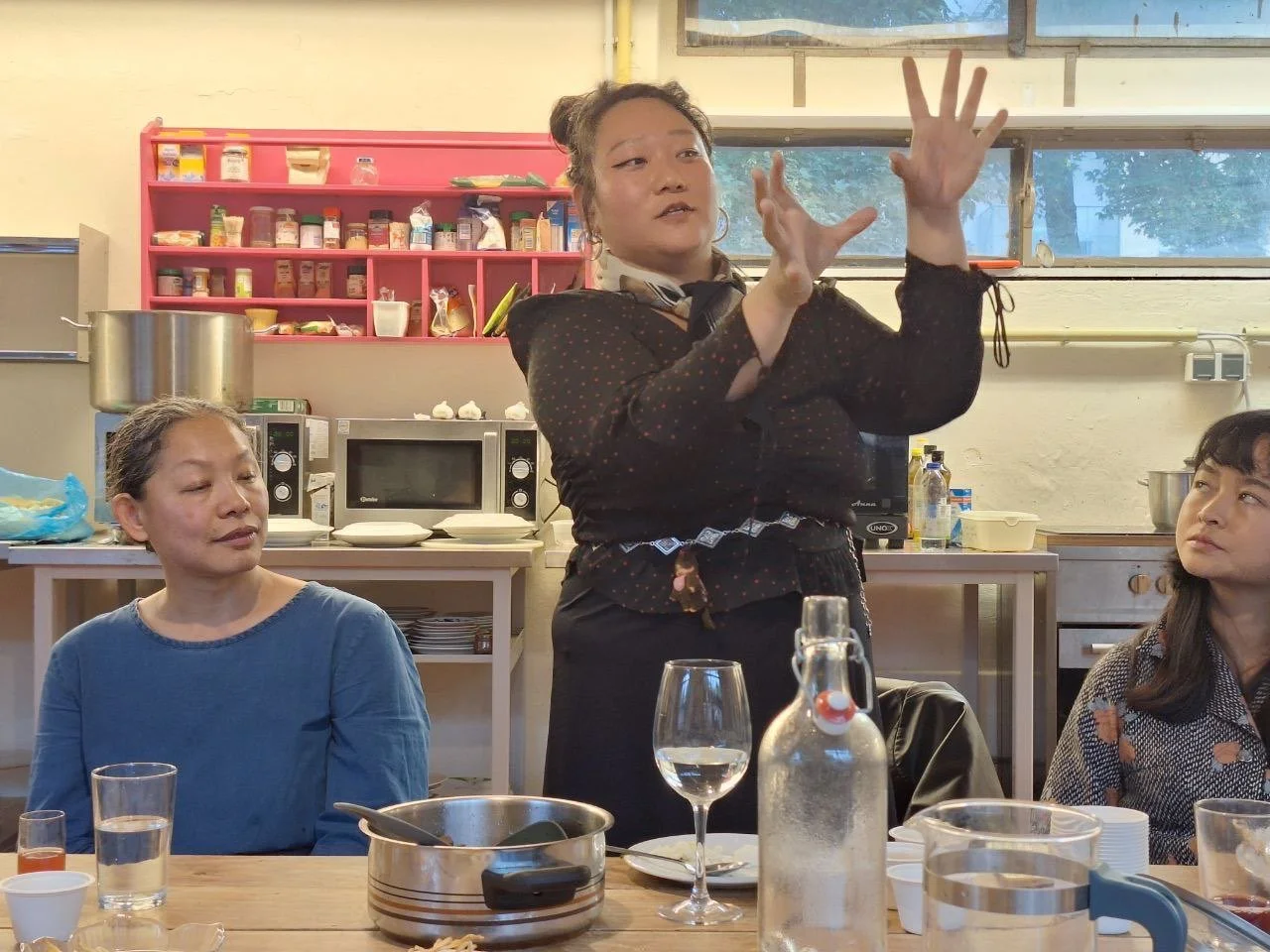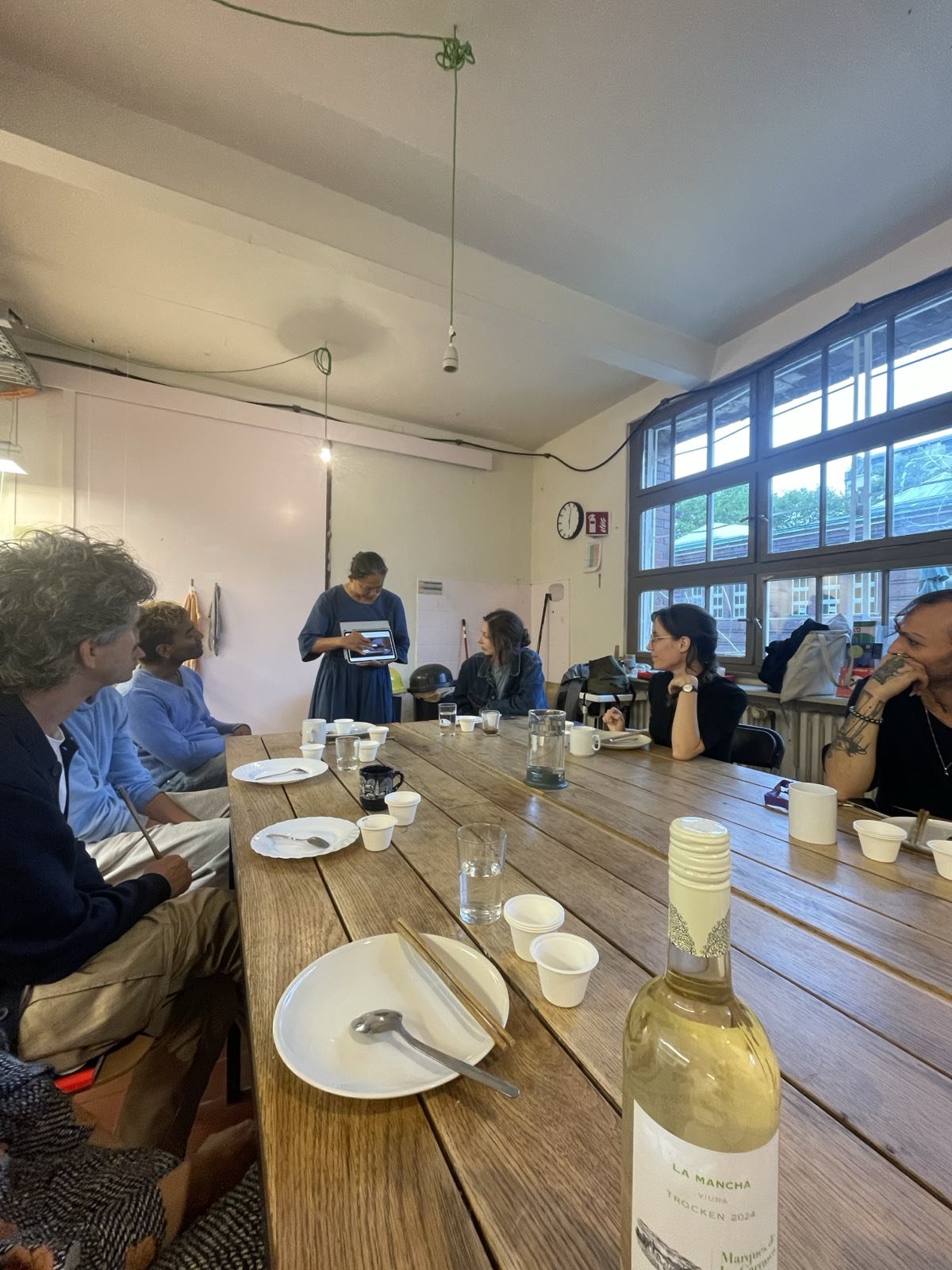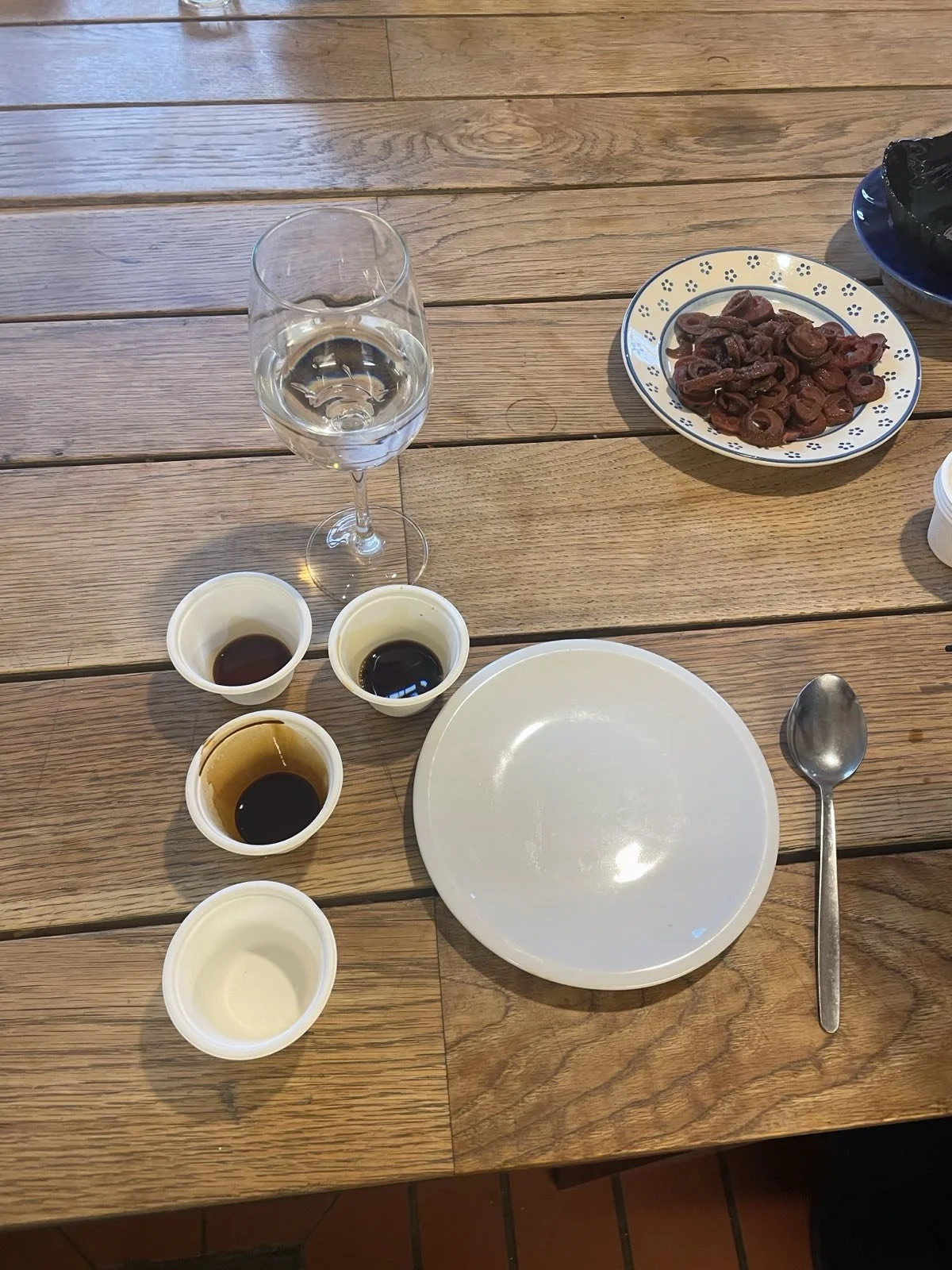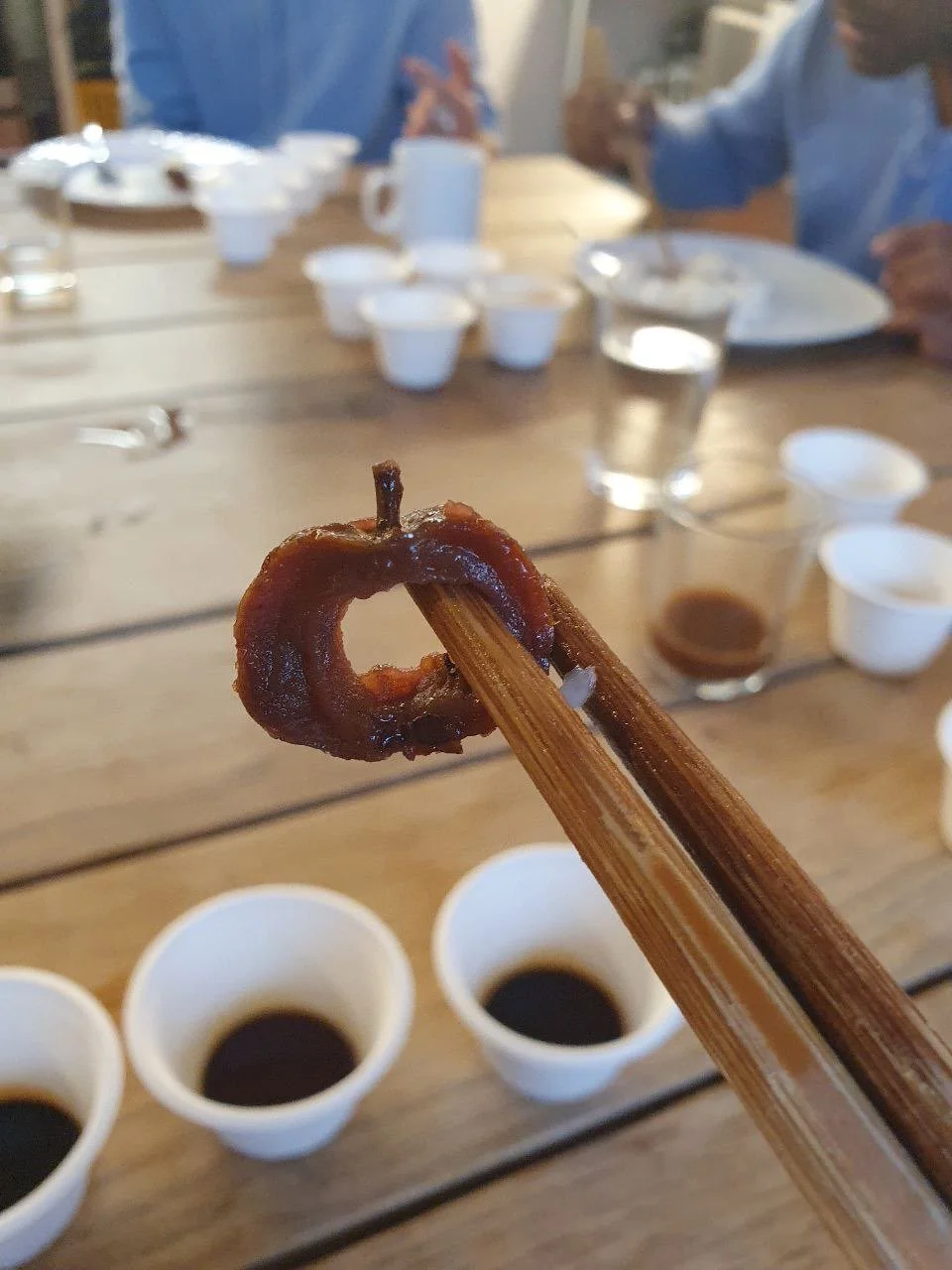
It all begins with an invitation from Frida. We were both born and raised in Hong Kong. In this context, Food & Politics @ HZT ask a student to bring in someone with them to host a dinner session through eating and tasting, to connect with the political dimension of food. Frida's initial observation was straightforward: many people around her in Berlin only know one kind of soy sauce and nothing beyond its function as a generic “Asian seasoning.” And indeed, in most Asian supermarkets in Berlin, the most visible brands are Lee Kum Kee and Kikkoman and many others that look alike also appear in countless restaurants and private kitchens.
These brands have come to represent what is widely recognised as “Asian flavour.” Yet this flavour is the result of industrial-scale fermentation, calibrated sweetness, stabilisers, and flavour enhancers. It is a taste engineered for consistency and global circulation.
Although it is often described as a “familiar taste of home,” that familiarity is not simply inherited; it is produced. Corporations shape taste memory through repetition, availability, and branding. What feels intimate is often infrastructural.
The soy sauce that many Hong Kong households consider standard is not the slow, unpredictable brew of a grandmother at the stove. It is a capitalist product with a standardised profile that replicates across supermarket shelves, across classes, across diasporic kitchens.
From my perspective, taste is never purely cultural. It is political.
It is shaped by distribution systems, by what is affordable, by what is deemed exportable, and by what is considered socially acceptable.
In this sense, I think of it as a “gustatory capitalist replica.”
To speak about soy sauce only as branding or global standardisation would be incomplete. It is also tied to survival.
In times of hardship, when there was no time or means to prepare a full dish, soy sauce could become the dish itself.
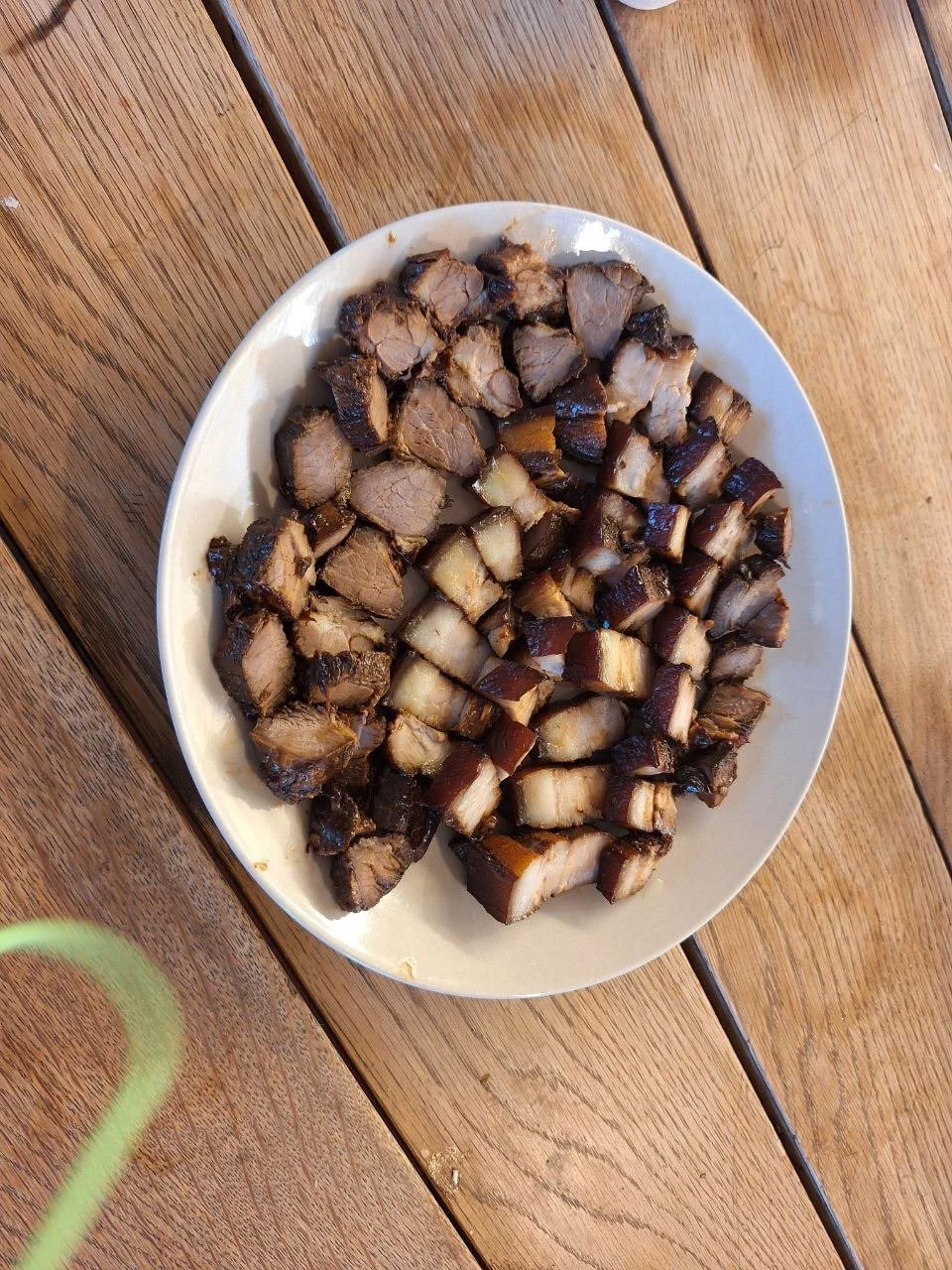
In post-war Hong Kong, animal fat, especially lard, was a crucial source of energy for labouring bodies. Meat was expensive and required daily purchase from wet markets. Refrigeration was uncommon; fridges consumed electricity that many households could not easily afford. Cooking was shaped by infrastructure.
So meals were assembled from what was available: a bowl of steamed rice, a spoonful of rendered pork fat, and a dash of 煉製 soy sauce that had been “refined” with sugar, scallions, ginger, or garlic.
This act of refinement — 煉 (lin) — is important.
It is a technique of concentration and transformation. Through 煉, soy sauce thickens, deepens, and becomes more than itself.
When we recreated this gesture in Berlin — offering rice and 煉 sauces — it was not an attempt at nostalgia. It was a way of situating taste within class, infrastructure, and migration. A reminder that flavour is shaped as much by scarcity and industry as by longing. This work has shaped my ongoing inquiry into how food mediates identity: not as nostalgia, but as negotiation; not as authenticity, but as friction.